

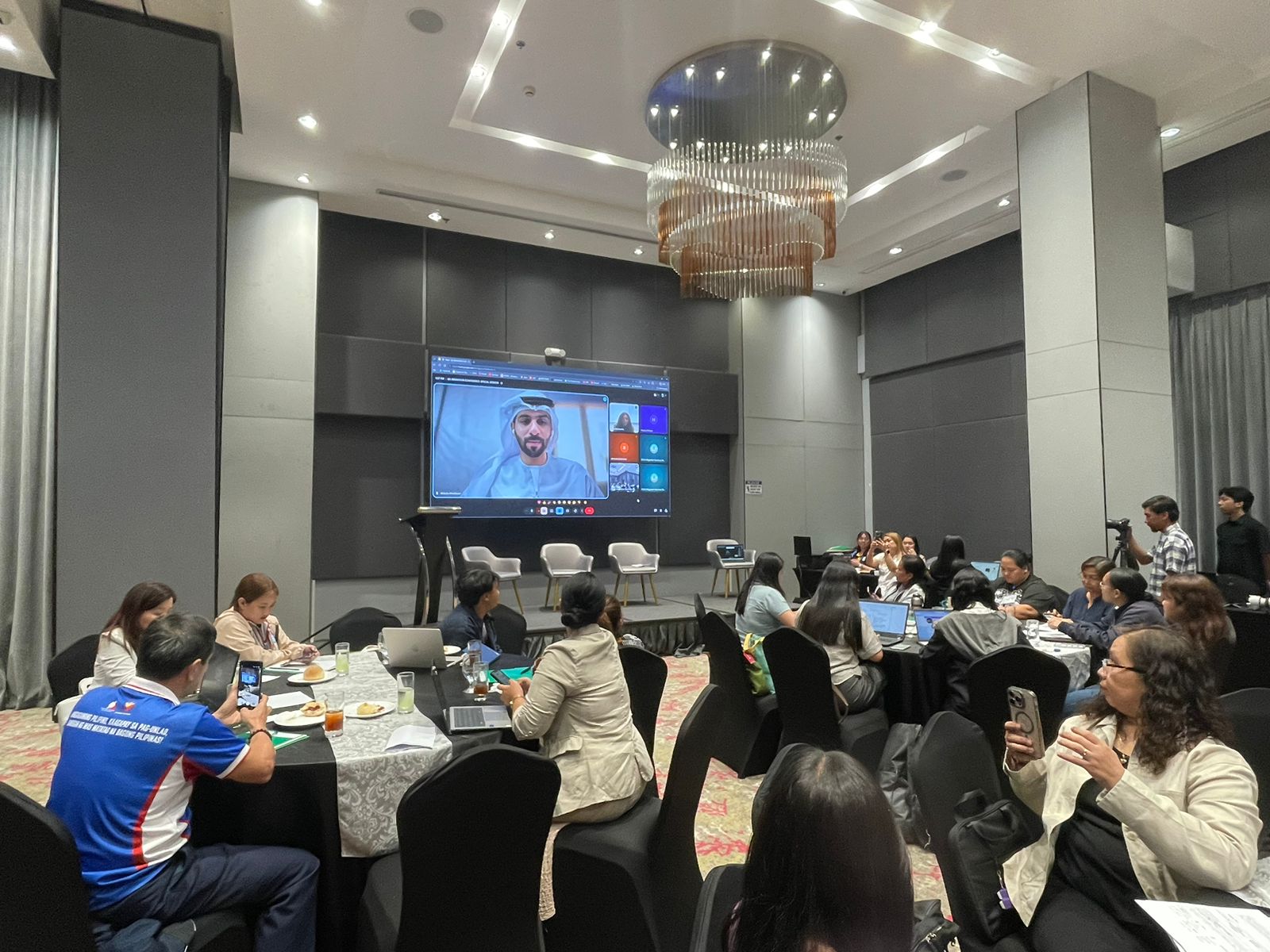
From 23–24 June 2026, the Middle East Centre for Training and Development (MECTD) was invited to virtually participate, alongside the Permanent Committee of Labour Affairs in Dubai (PCLA), in the Multi-Stakeholder Conference on Migration and Development held in Quezon City, Philippines. The conference brought together government representatives, local authorities, civil society organizations, and migration stakeholders to exchange experiences, strengthen partnerships, and advance practical approaches to migration governance and migrant welfare at the local level.
As part of its collaboration with PCLA and the Quezon City Government, MECTD supported the facilitation of the Special Session: “Quezon City Partnerships and Good Practices.” The session highlighted innovative partnership models and effective practices that contribute to improved migration governance and service delivery for migrant workers and their families. Experiences from PCLA–Dubai and UCLG ASPAC–Philippines were presented to support Quezon City’s ongoing efforts to strengthen migration governance frameworks and enhance multi-stakeholder cooperation.
During the session, officials from PCLA showcased the findings of the 2024 joint study conducted in collaboration with the Middle East Centre for Training and Development and the Quezon City Public Employment Service Office (PESO), entitled “Case Study on Local Government Practices for the Services Offered to Migrant Workers in Labour Sending and Receiving Cities: The Cases of Quezon City, Philippines, and Dubai, United Arab Emirates.” The study examined good practices and service delivery mechanisms implemented by local authorities in both labour-sending and labour-receiving contexts, highlighting opportunities for knowledge exchange, institutional collaboration, and the development of migrant-centred policies and services.
The conference provided an important platform for strengthening cooperation between local governments and migration stakeholders, while reinforcing the role of city-level partnerships in promoting safe, orderly, and regular migration, enhancing migrant protection, and advancing sustainable development outcomes for communities in both countries of origin and destination.